A showroom that drives to you.
Stone Showcase sells stone, quartz, and wood surfaces to architects and interior designers. Slabs are heavy and showrooms sit still, so they put one inside a Freightliner box truck and sent it out on the road. I did the vehicle graphics: template, layout, and print-ready production files for the wrap, plus the content on the screens inside and the sample box people carried out of it.
They bought a truck that used to be someone else's.
The vehicle showed up as a bare white box truck with a previous brand still on the side and a glass display wall down the driver side. Inside: sample shelving, a counter, and screens.
My job was to make it read as Element Surfaces from across a parking lot, hold up as a working showroom once someone climbed the steps, and send them home holding something.
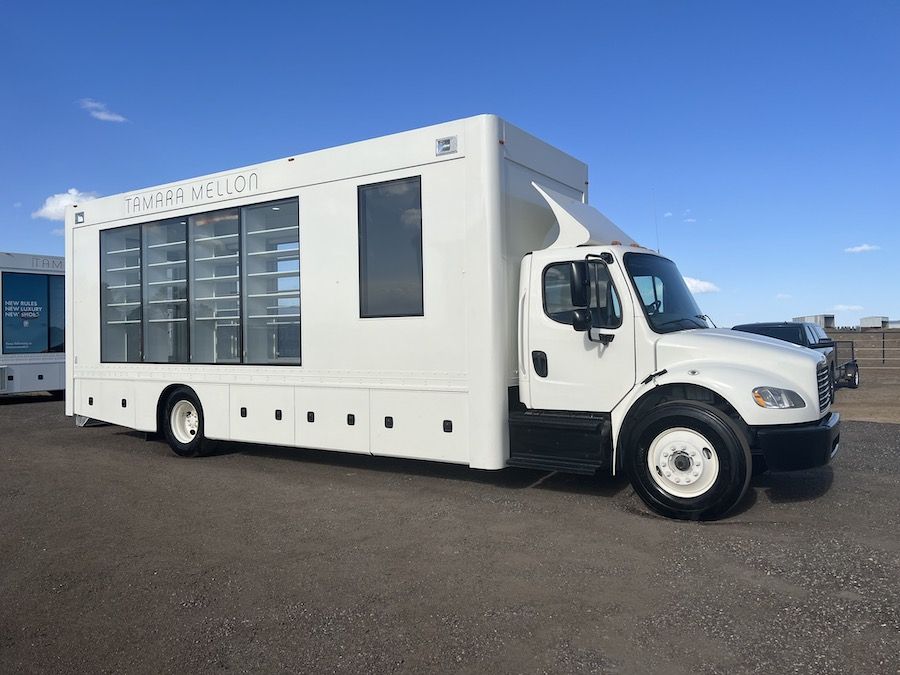
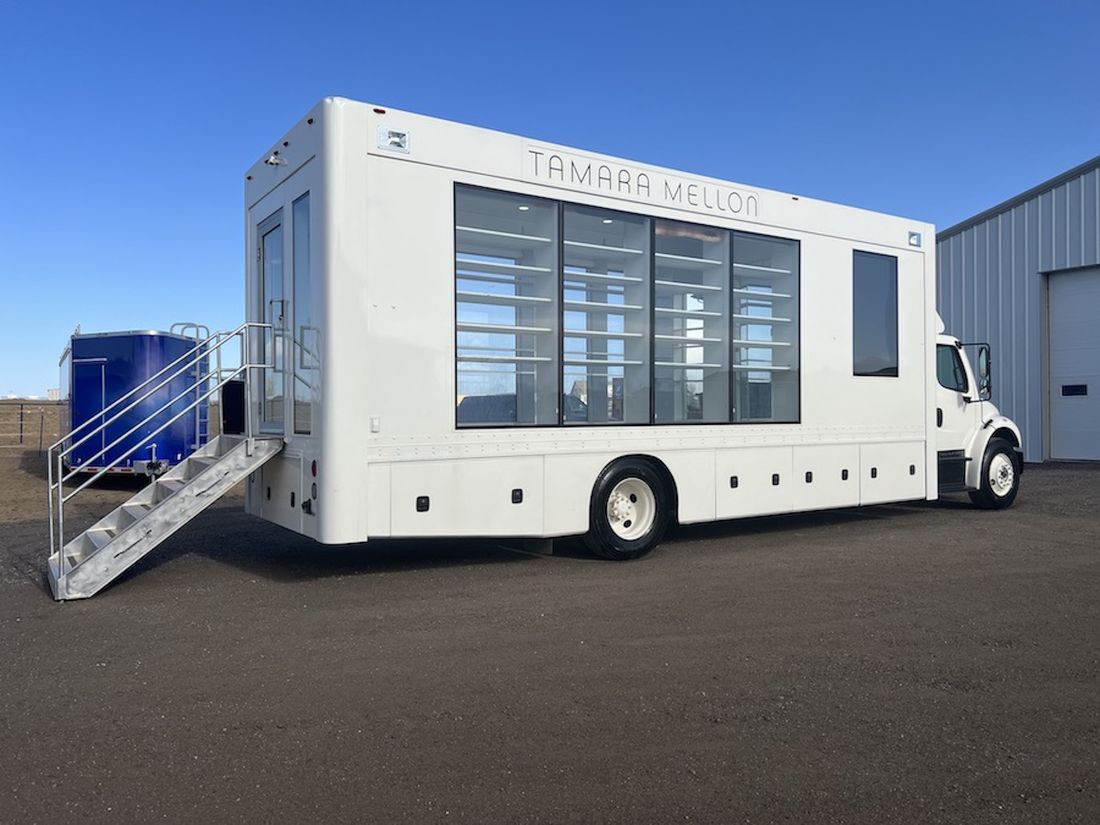
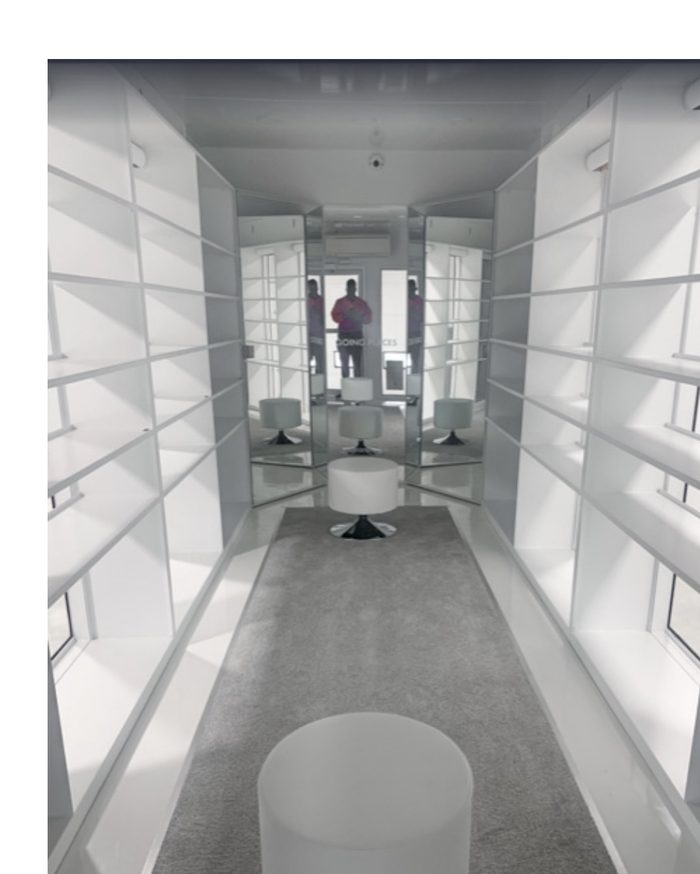
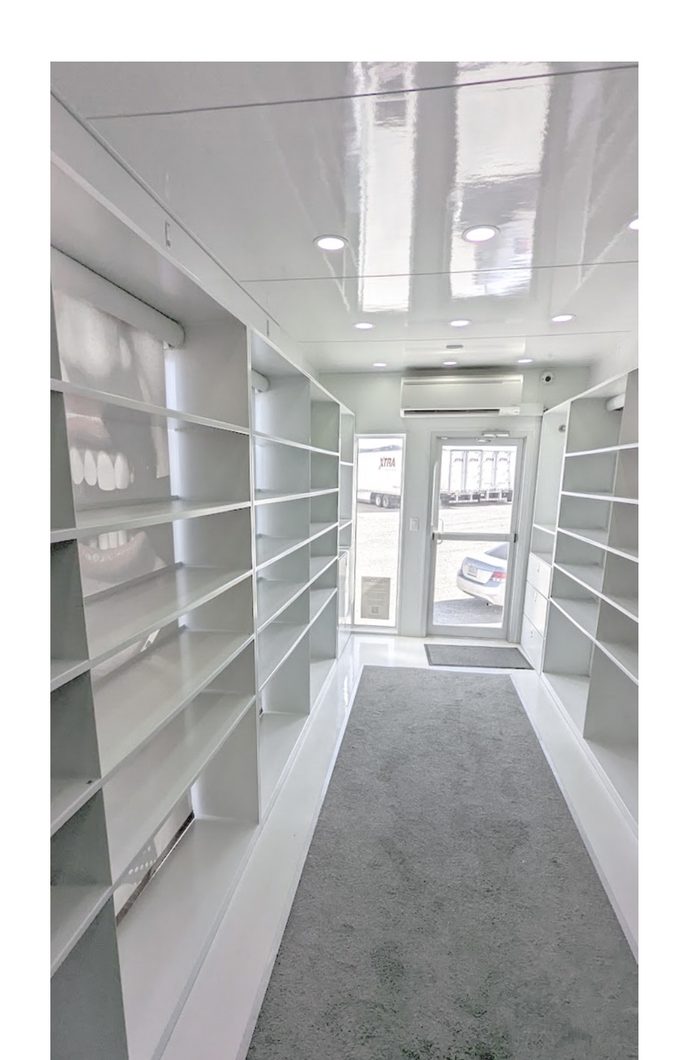
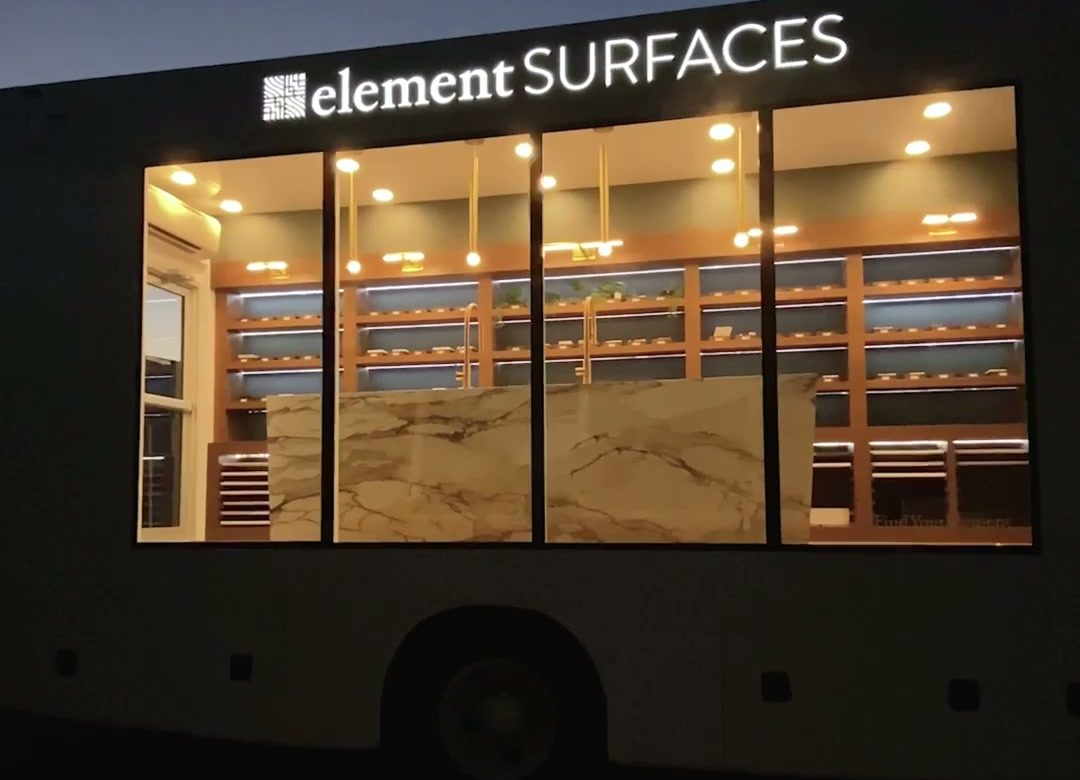
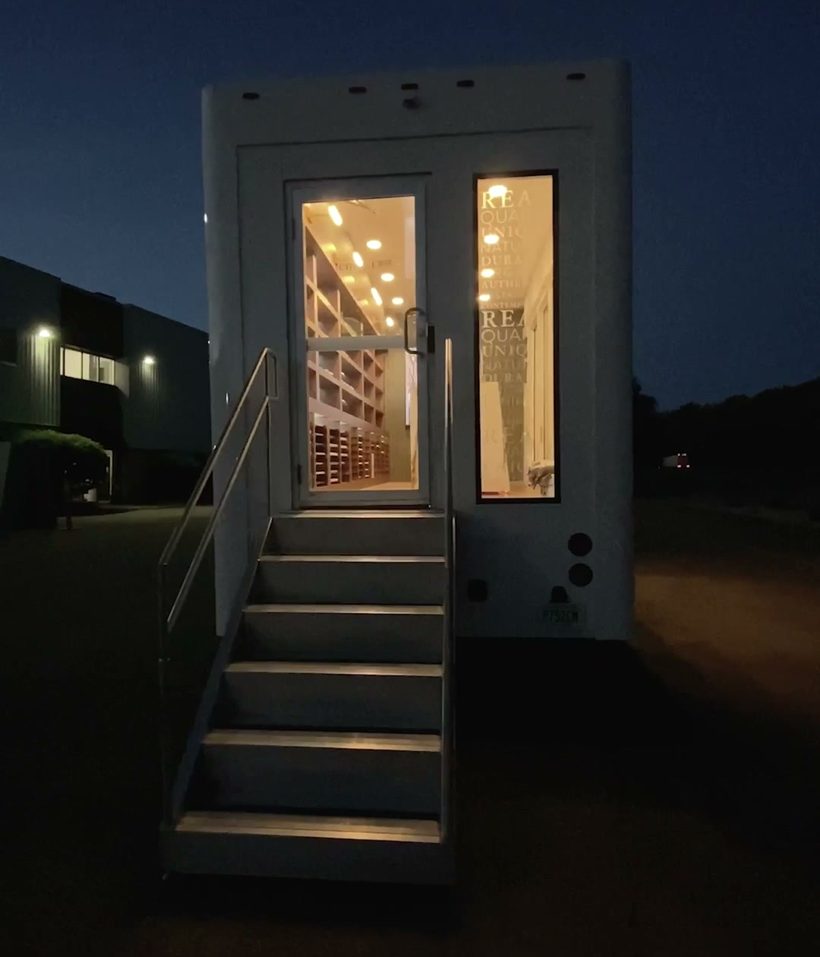
Inside it is a corridor: sample shelving floor to ceiling down both walls, a counter at the far end, and screens set into the display wall.
Wrapping a vehicle is a measuring job before it is a design job.
A truck is not a rectangle. It has rivets, seams, door gaps, a wheel arch, and four separate glass panels that each take their own piece of printed film. Artwork laid out without any of that in front of you gets installed with a logo cut in half by a door seam, and nobody finds out until the film is already on the vehicle.
So the first thing I built was not a design. It was a scaled vehicle template, traced panel by panel with real measurements, so every piece of art had a defined live area and the installer knew where the seams fell before anything got printed.
To be clear about the boundary: I am the design and prepress side of this. I did not print it and I did not install it. What I own is that the shop got files that go straight to the printer without a phone call.
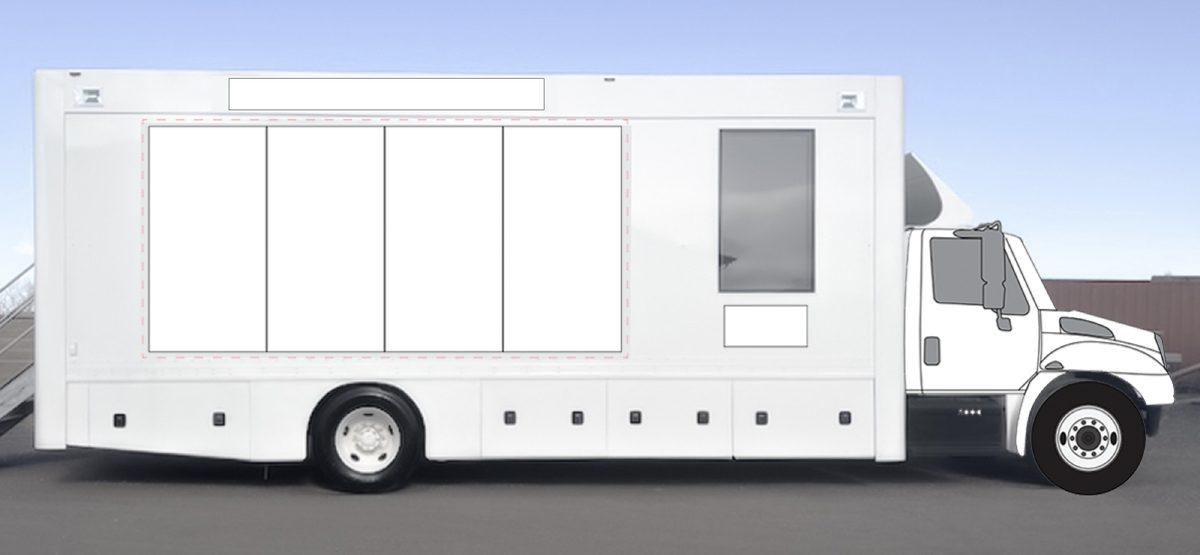
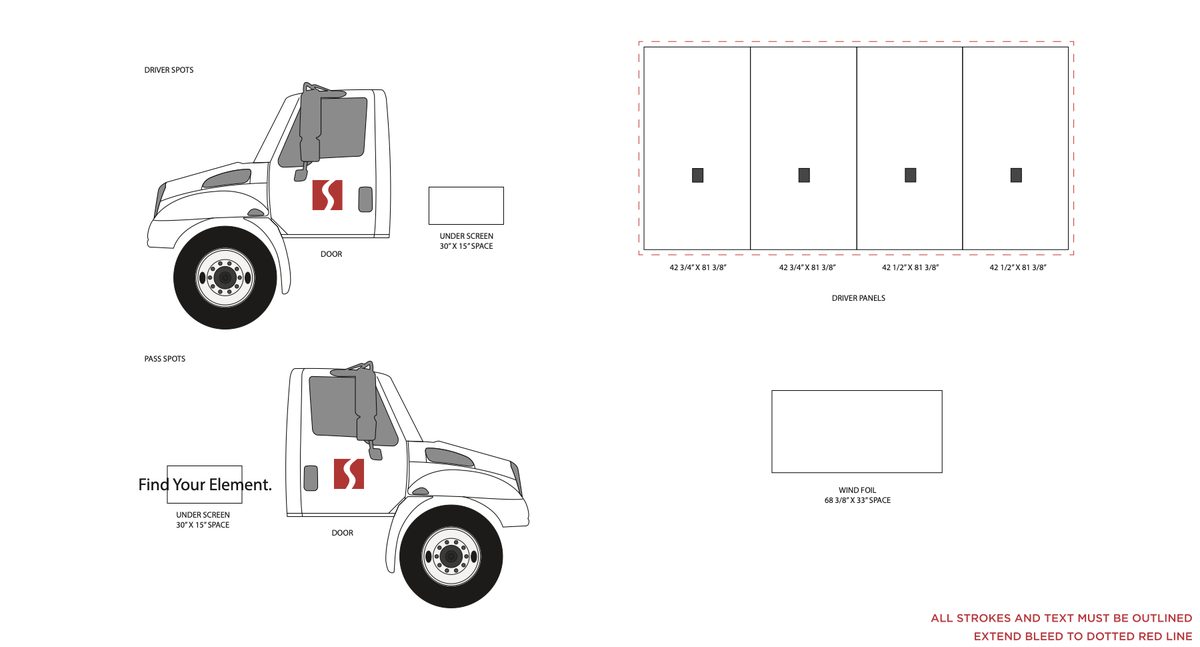
Then each of those four panels got its own artwork, one per product line, so the side of the truck reads as a row of rooms rather than one pattern tiled across the whole flank.
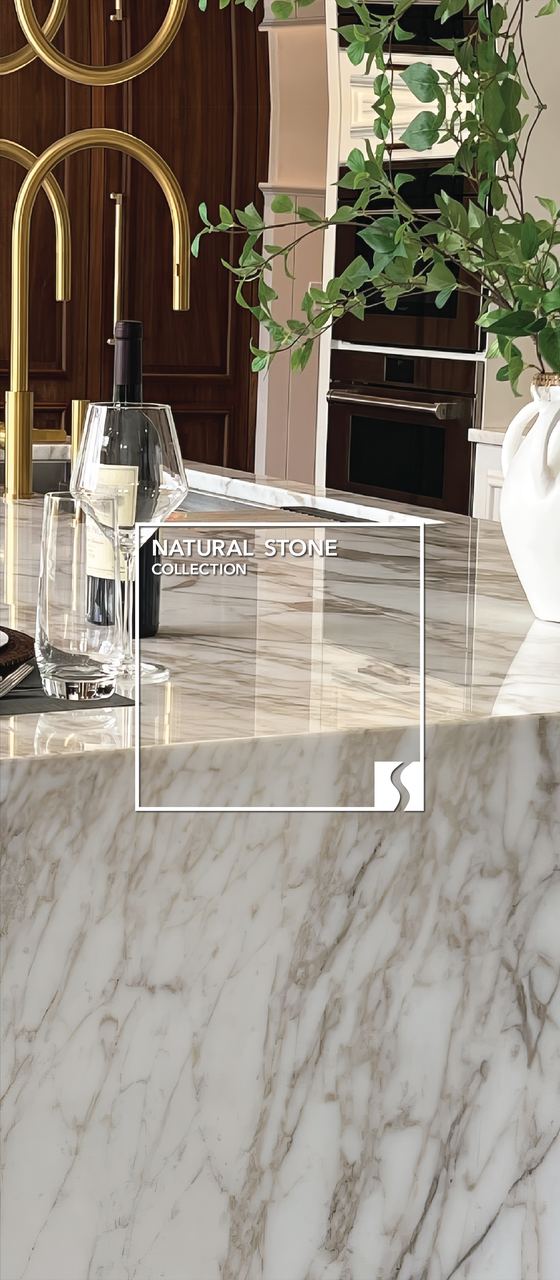
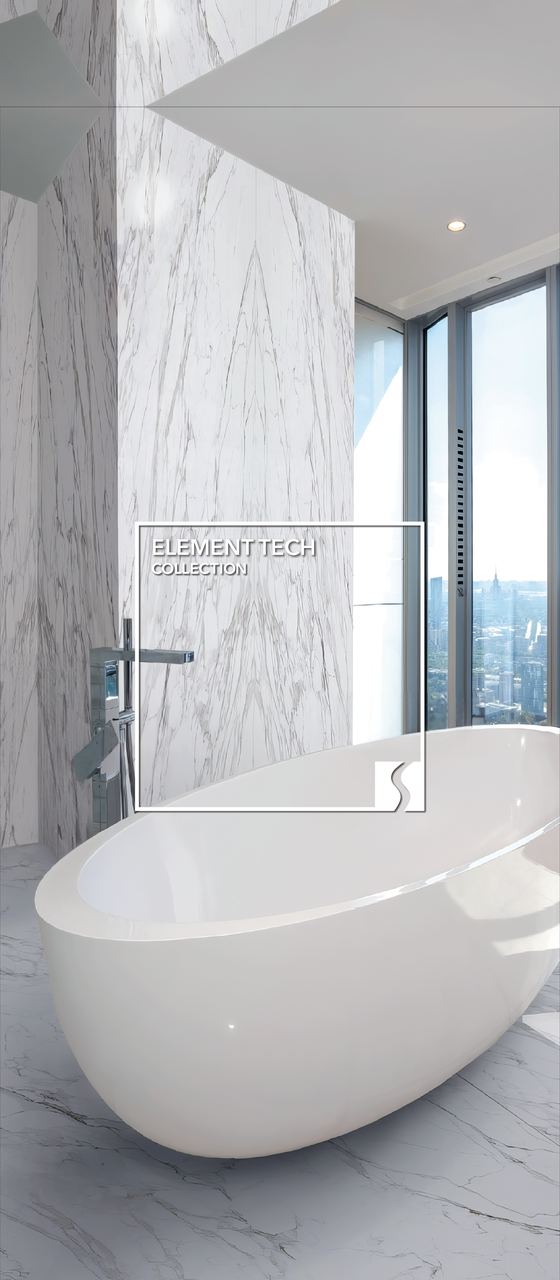
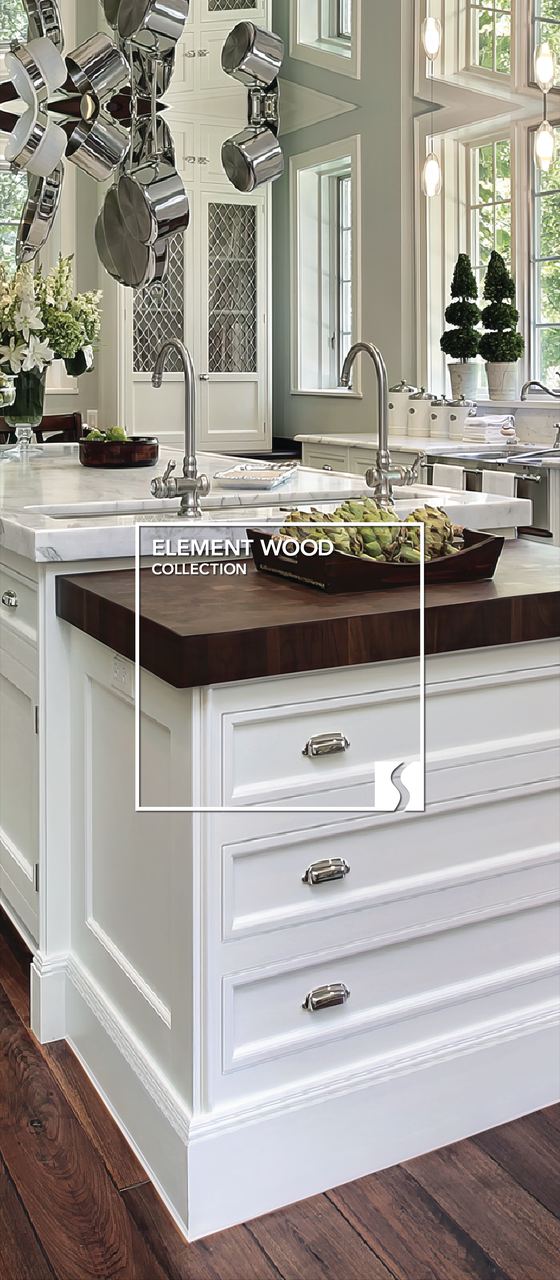
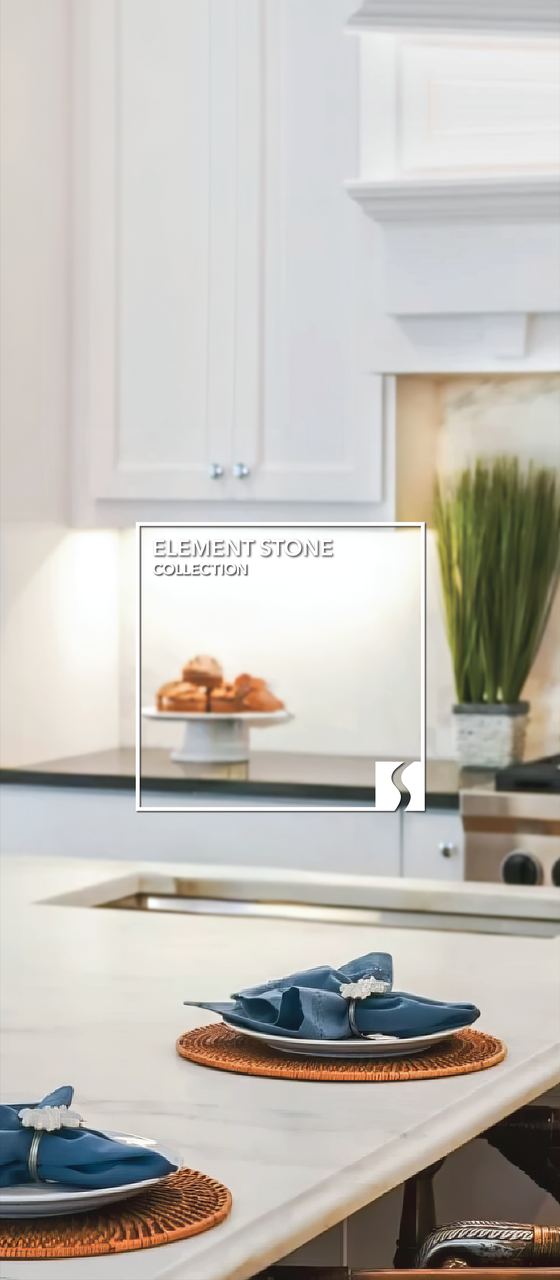
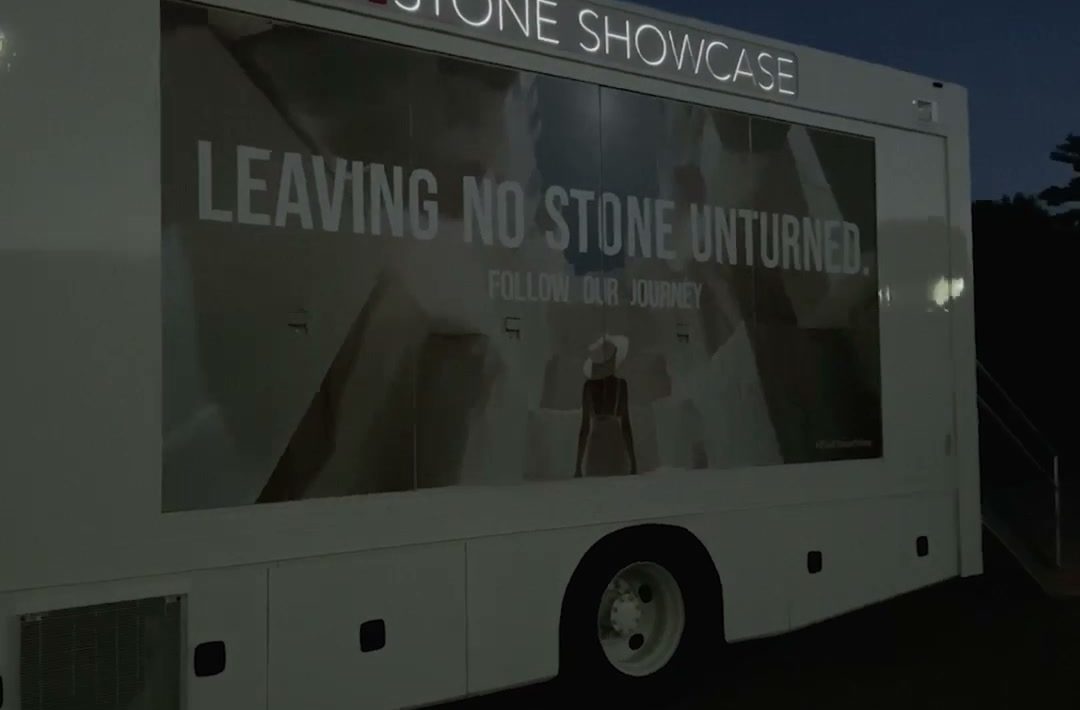
The rear graphic is a marble quarry, built to run the full width of the vehicle. At final output size that file is 27,960 pixels wide. Wide-format art gets built to the finished dimensions of the panel it lands on, so the effective resolution still holds up at arm's length, not just from across a parking lot. Upscaling a web image to truck scale falls apart the second somebody walks up to it.

How the files shipped
Built in vector, released as layered Illustrator and EPS with one layer per panel, so nothing has to be pulled apart at the shop.
All type and strokes converted to outlines, so nothing reflows or substitutes on a machine that does not have the font loaded.
Bleed extended past the trim line on every panel, so a quarter inch of drift on the cut does not leave white showing at a seam.
Brand colors specified as PMS spot values rather than left to convert on their own, so the red reads the same on the cab decal as it does on the rear panel.
Gray and black areas on the template treated as no-wrap zones, and contours left with room for installer liberty, because the film has to go somewhere when it wraps a curve.
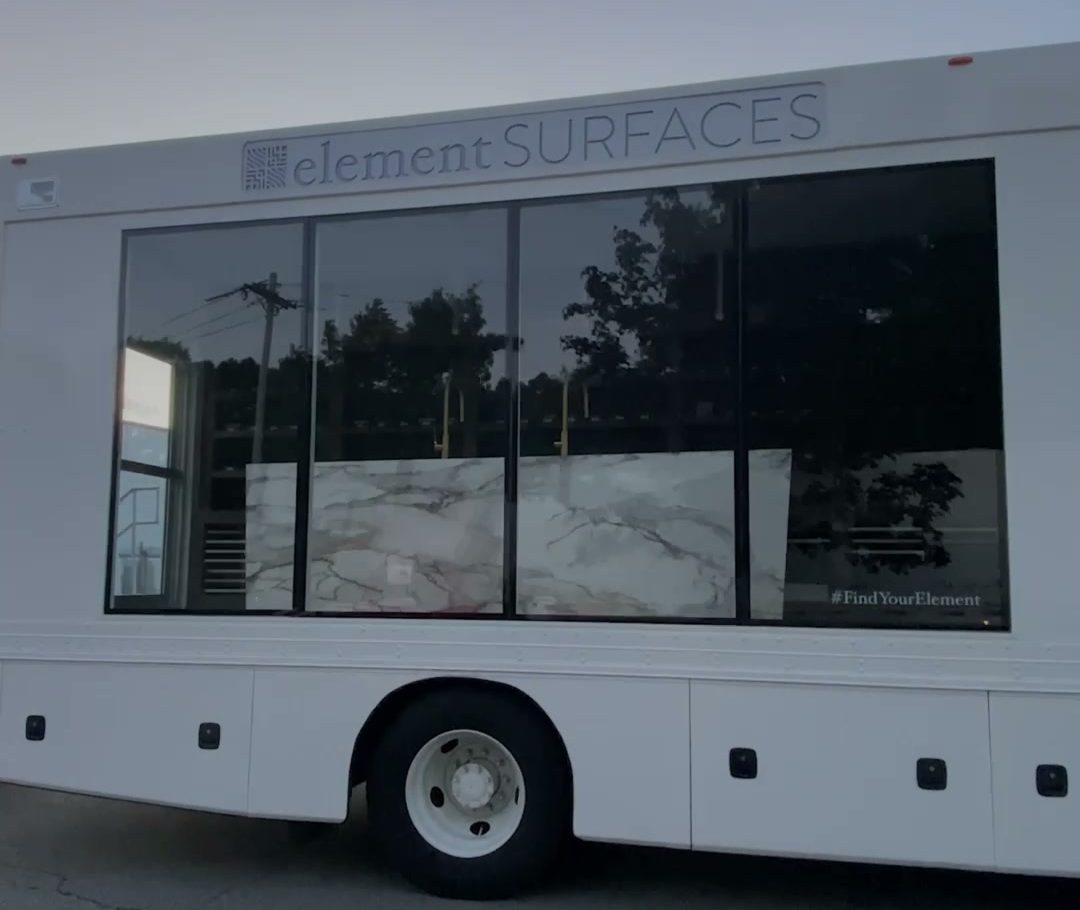
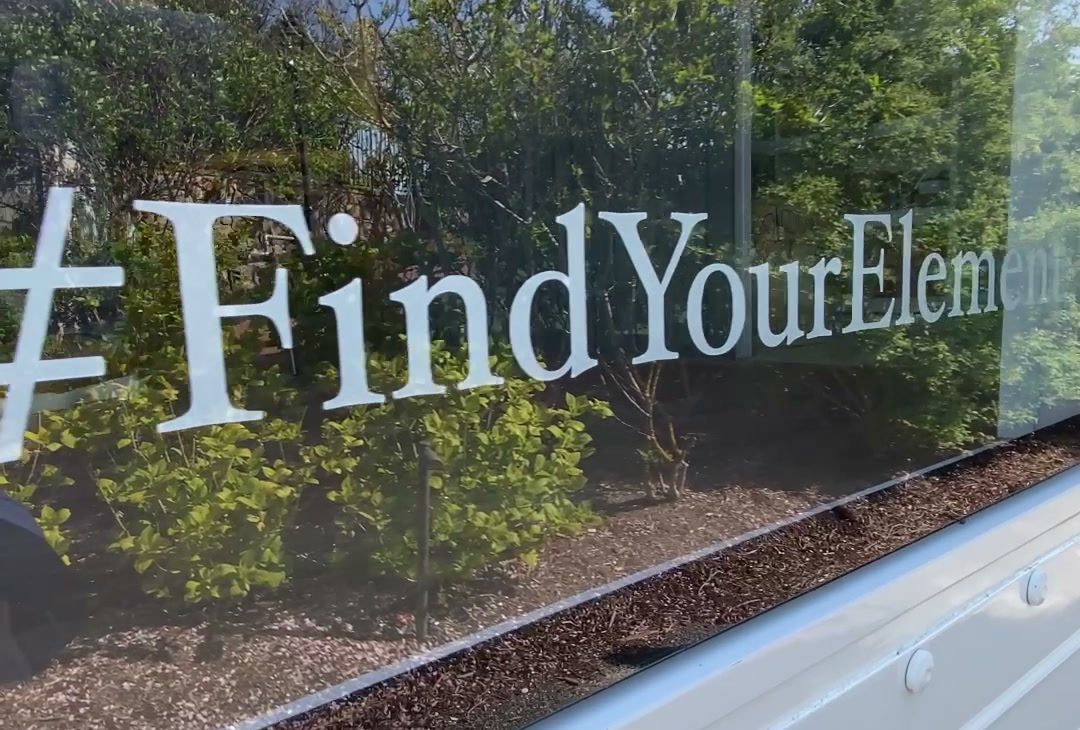
The tagline reads Find Your Element. Small type on a vehicle is the easiest thing in the world to get wrong, so it got a dimensioned live area on the template instead of being placed by eye. Here it is on the glass.
Then it went out and did the job.
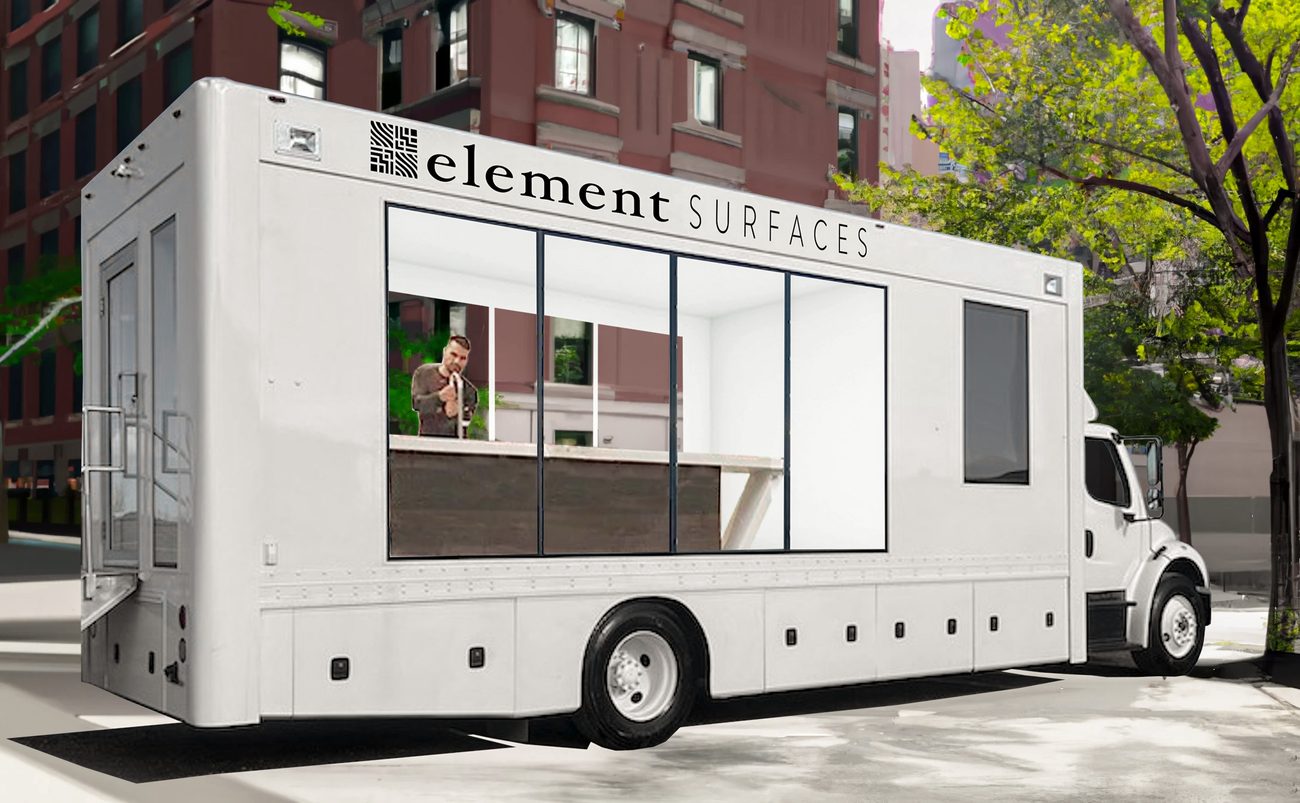
Templates and proofs are worth nothing until a printer lays down film and an installer squeegees and post-heats it onto a curved panel. That part is a different craft and it is not mine. This is the vehicle after all of it, parked on a lot with the trees behind it.
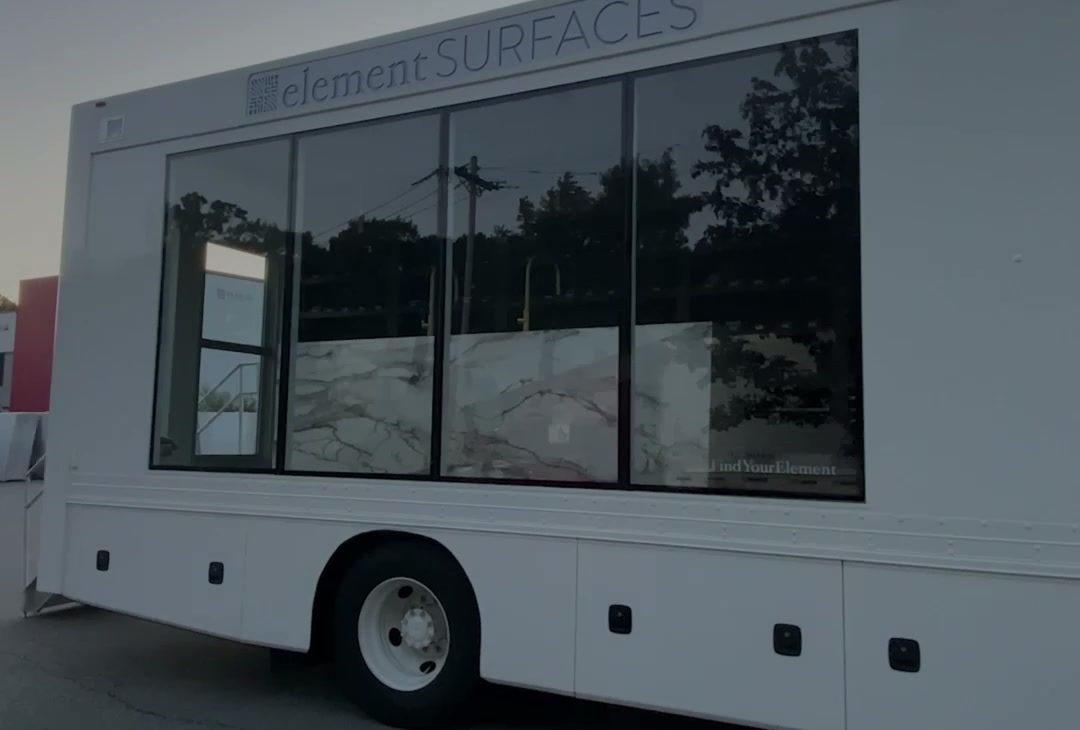
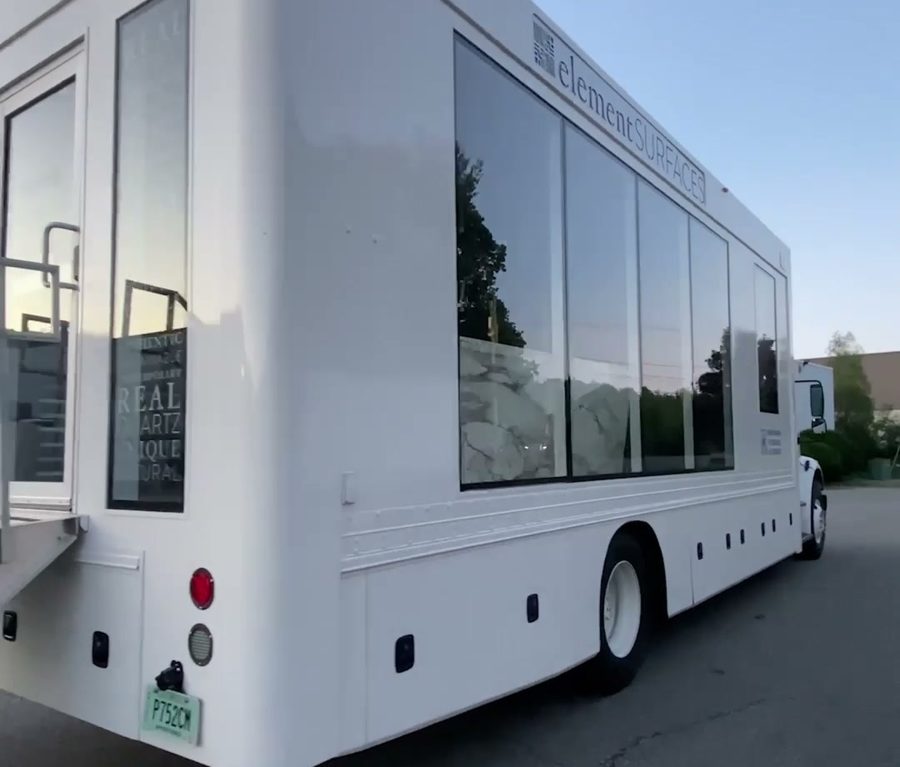
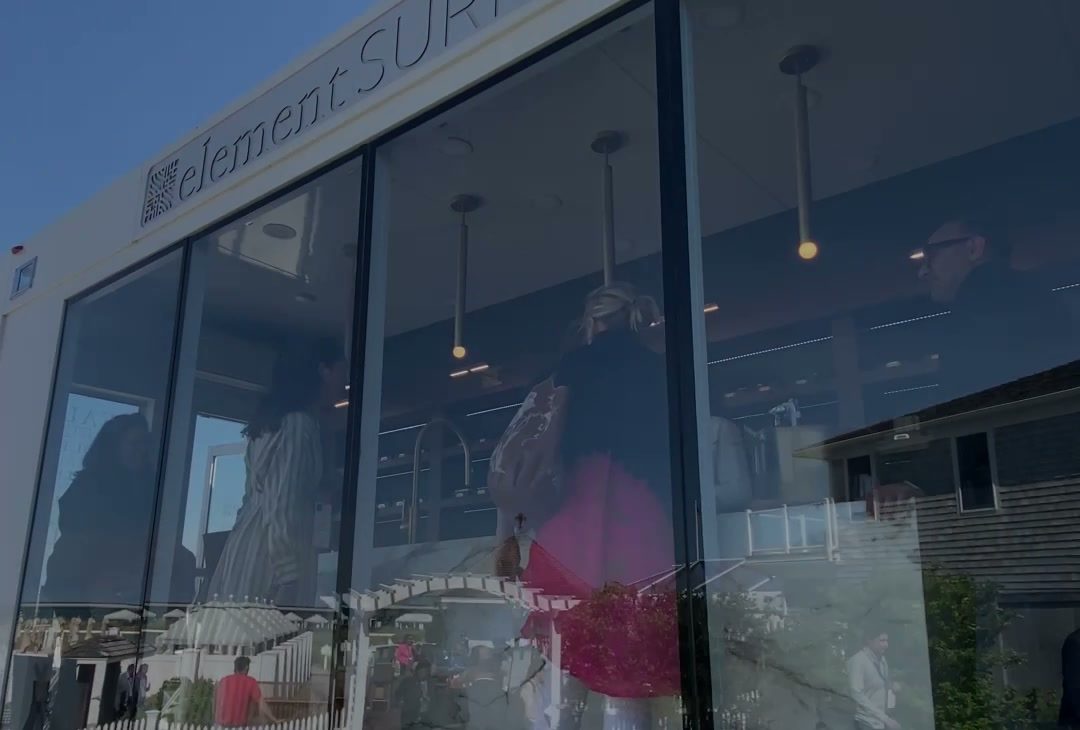
The part that only shows up at night is the one I did not design and could not have. With the interior lit and the glass wall glowing, the whole sample library reads from across a parking lot. The wrap holds the top band and the rear graphic, and the product does the rest.
Once they are inside, the walls do the talking.
The truck has vertical screens mounted in the display wall. I built the loops that play on them: material stories for the stone, wood, and technical lines, and a product demo for the induction cooktop that installs underneath a countertop and disappears.
All of it is built vertical to match the screens, silent, and looping, because there is no one standing there to press play and no audio in a room where a sales conversation is happening.
Nobody remembers a slab. They remember what they took home.
A designer leaves the truck with samples. Those samples end up on a desk next to a dozen other companies' samples, which makes the packaging the part of this job that keeps working for months after the truck drives away.
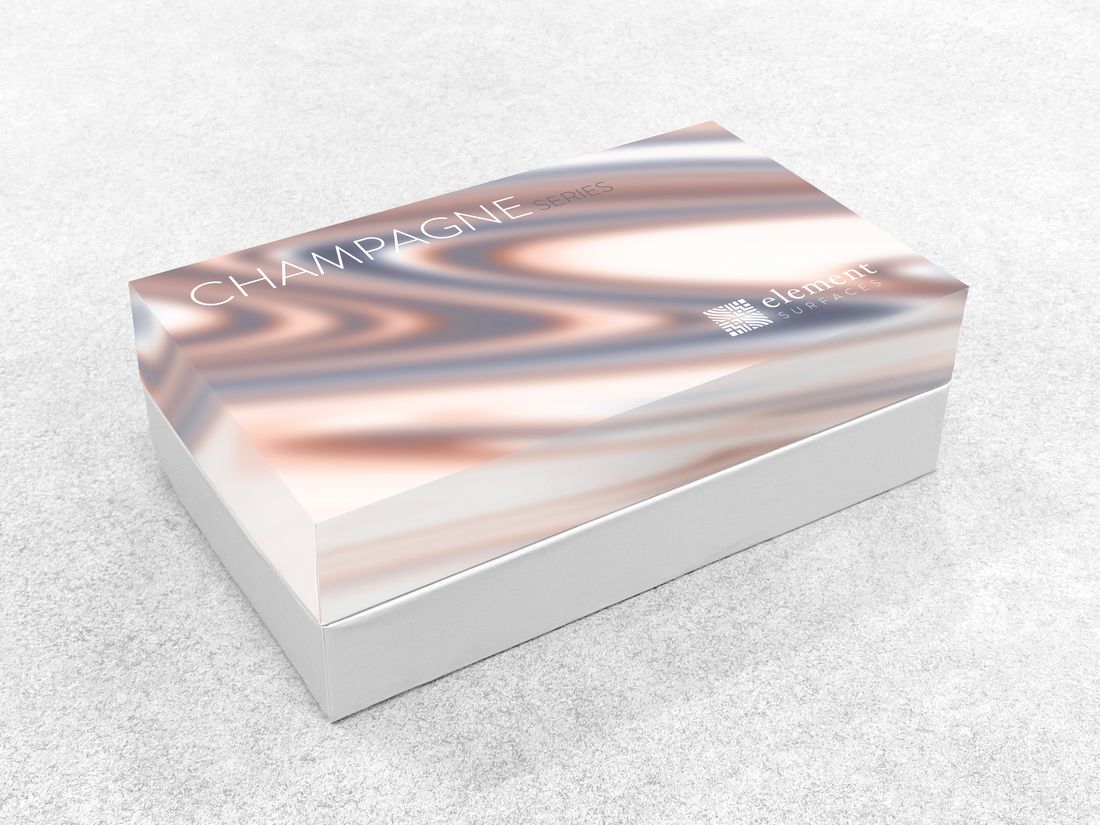
I designed the presentation box for the Champagne series, a set of surfaces named after cocktails. The lid carries the pattern as a soft metallic wash so the box looks like the product instead of describing it.
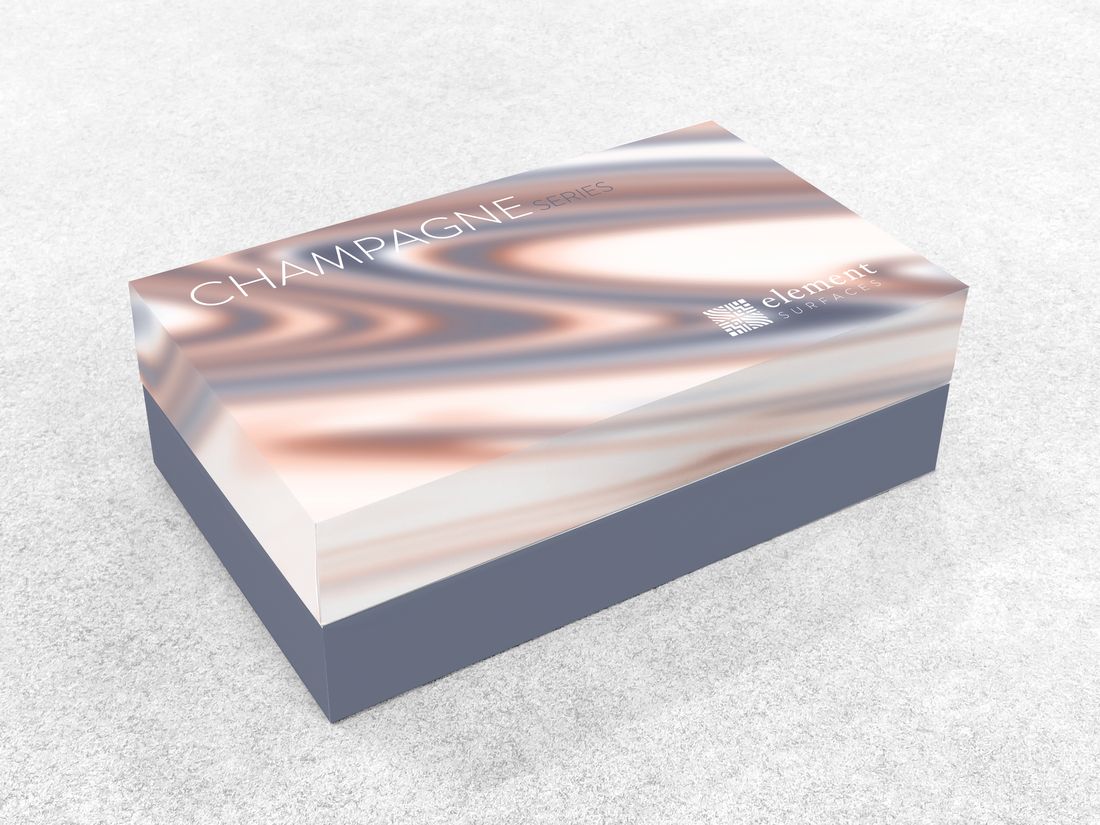
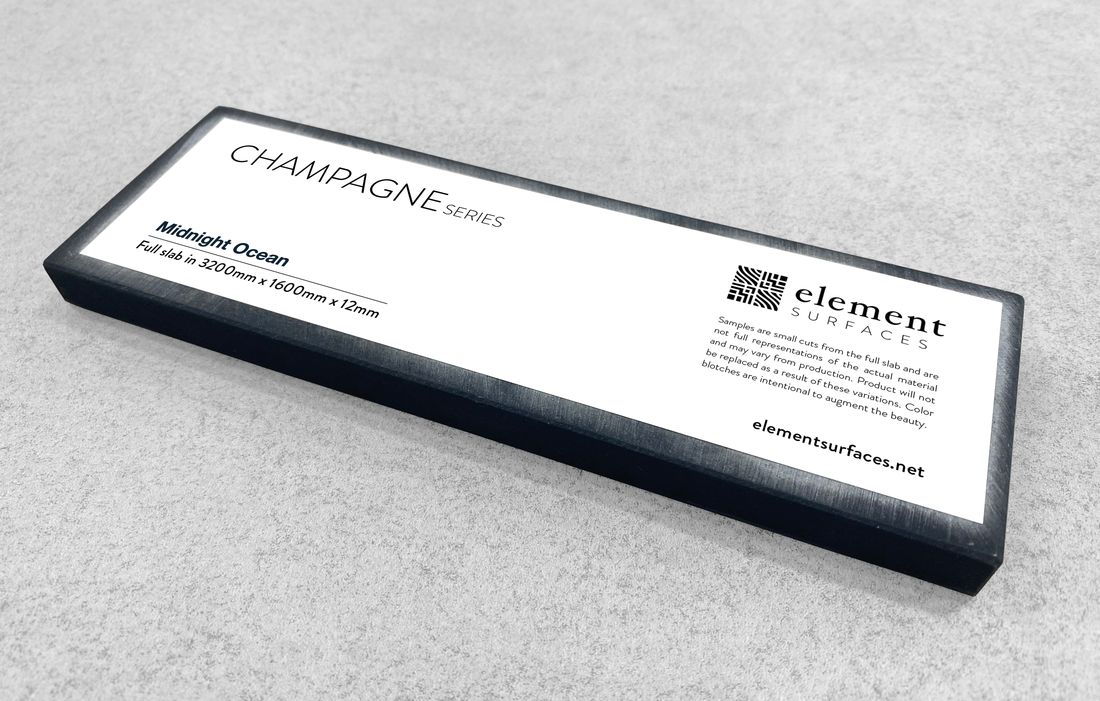
Each individual sample got a label built to the same system: series name, the colorway, and the real slab dimensions, so the piece in someone's hand still tells them what they are actually specifying.
A truck full of samples is worth nothing parked.
The last piece was getting design firms to actually book a visit. The truck was sold in as Sip & Sample, an hour at your own office where the showroom shows up, you handle the material, watch the cooktop demo, and earn continuing education credit for the time.
That framing is what turned it from a vehicle into an appointment. The flyer went out through the sales team and led with the one line that mattered to a busy firm: let our studio come to you.

It turned a sales problem into a scheduling problem. Instead of waiting for an architect to drive to a showroom, the sales team booked an hour at the firm's own office and arrived with the full sample library, a working demo, and a continuing education credit as the reason to say yes. The wrap made the truck recognizable on the road between stops, the screens carried the pitch while the rep talked, and the box kept the brand on a designer's desk after it left.